Soil Nutrient Analysis Lab (SNAL)
Storrs
College of Agriculture, Health, and Natural Resources
The Soil Nutrient Analysis Lab (SNAL) provides soil and plant nutrient testing and practical, research-based recommendations for farms, landscapes, lawns, and gardens through a close partnership with UConn Extension. Each year, we process about 14,000 samples and provide clear, science-based lime and fertilizer recommendations grounded in university research and field experience. We serve homeowners, farmers, commercial and greenhouse growers, landscapers, turf professionals, consultants, and researchers, with a focus on decision-ready results.
Facility HomepageContacts
Facility Phone Number: 860-486-4274
Campus Address
George Leigh Minor Plant and Soil Health Center
27A Manter Rd.
Storrs, CT 06269-4102
Mailing Address
George Leigh Minor Plant and Soil Health Center
Soil Nutrient Analysis Laboratory
27A Manter Rd., Unit 4102
Storrs, CT 06269-4102
Resources
Plant Tissue Analysis
Not only can plant tissue testing be used to monitor the nutrient status of plants, but it can also help identify nutrient deficiencies and imbalances. Results would include total percent nitrogen, phosphorus, potassium, calcium and magnesium along with the parts per million (on dry weight basis) of boron, copper, iron, manganese, molybdenum, sodium, zinc, aluminum and lead. Results will indicate whether each nutrient is within sufficiency or average ranges.
Plant Tissue Nutrient Test Pricing

Standard Soil Nutrient Analysis (Modified Morgan)
Samples submitted for the Standard Nutrient Analysis are analyzed for plant available calcium, magnesium, phosphorus, potassium, iron, manganese, copper, zinc, aluminum and boron. The soil pH is determined and samples are screened for estimated total lead. Soil test results also include an estimation of the soil textural class and amount of soil organic matter. Limestone and fertilizer recommendations are made based on test results and the crop being grown. (Soils sent in the pre-paid soil test collection kits receive this test.) The standard nutrient analysis is appropriate for lawns, vegetables, flowers, woody ornamentals, fruits, agronomic crops and nursery crops (like Christmas trees) grown in mineral soil.
Saturated Media Extract (SME): For Soilless Greenhouse Media
This analysis is appropriate for soilless greenhouse media or mixes containing 20 percent or less mineral soil. Samples submitted for the Saturated Media Analysis are analyzed for plant available calcium, magnesium, phosphorus, potassium, copper, boron, iron, manganese, and zinc. Quick diagnostic tests estimate nitrate-nitrogen and ammonium-nitrogen. Media pH and soluble salts are also determined. Recommendations can be requested by the University’s Extension Specialist for Greenhouse Crops.

Soil pH Only Analysis
The pH is determined and limestone recommendations are made if the soil pH needs to be increased while sulfur recommendations are given if the soil pH needs to be decreased. Soil pH testing is also included in the standard nutrient analysis.
Soluble Salts
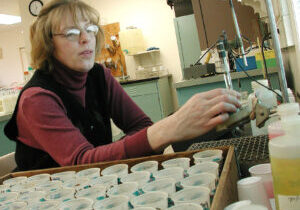
The total soluble salts are determined using a 1:2, V:V electrical conductivity method. Interpretation is provided.

Organic Matter Content
This analysis gives the percent organic matter in soil or compost determined by the loss on ignition. Most plants do best in soils with organic matter contents between 4 and 8 percent. Finished composts usually range from 40 to 60 percent organic matter. Interpretation is provided but recommendations are not made.
Soil Textural Analysis
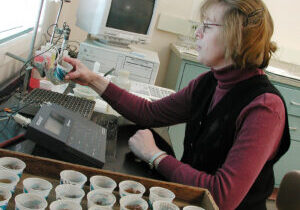
The total amounts of sand, silt and clay sized particles are determined using a hydrometer method. Soils are categorized according to USDA soil textural classifications. No recommendations are provided.

Pre-Sidedress Soil Nitrate Test (PSNT)
The PSNT measures plant available nitrate-nitrogen in the soil and is used by commercial silage corn, sweet corn and pumpkin growers. Turf growers may also find this test useful.

End-of-Season Cornstalk Test
Cornstalks collected in a prescribed manner at harvest are analyzed for nitrate-nitrogen. Results indicate whether below optimum, optimum or above optimum amounts of nitrogen were applied during the growing season. This test is often used in conjunction with the PSNT.