Archives
Research Data Services
Archives & Special Collections
Nuclear Magnetic Resonance (NMR)
Staff
Luke Fulton, Ph.D.
Facility Director
Chemistry R-002
luke.fulton@uconn.edu
860-486-4069
Faculty Scientific Advisers

Andrei Alexandrescu, Ph.D.
Professor
Biology Physics Building 209
andrei.alexandrescu@uconn.edu
860-486-4414

Olga Vinogradova, Ph.D.
Associate Professor
School of Pharmacy Room 632
olga.vinogradova@uconn.edu
860-486-2972

Mark Peczuh, Ph.D.
Professor
Chemistry A-316
mark.peczuh@uconn.edu
860-486-1605

Campus Address
Varian INOVA 600:
Chemistry Building, Room R002
Bruker Avance 500:
Pharmacy Biology Building, Room 056
Mailing Address
Varian INOVA 600:
55 North Eagleville Road, Unit 3060
Storrs, CT 06269
Bruker Avance 500:
69 North Eagleville Road, Unit 3149
Storrs, CT 06269
Instrumentation
Varian INOVA 600
Fitted with a triple-resonance (1H, 13C, 15N) inverse cryogenic probe, the Varian 600 has a superior proton sensitivity (signal-to-noise ratio ~4500). Owing to a high proton sensitivity, the 600 is an instrument of choice for characterization of submicrogram quantities of soluble organic compounds and the natural products via the proton-detected experiments: 1H one-dimensional spectra, 1H-1H, 1H-13C, and 1H-15N two-dimensional correlation spectra (COSY, TOCSY, NOESY, HSQC, HMBC, etc). The spectrometer is also fully equipped to carry out the biomolecular multidimensional (3D, 4D) NMR experiments and Diffusion Ordered Spectroscopy (DOSY) experiments. The Varian 600 can be found in the Chemistry Building, room R002.
Internal Rates
$17/hour Unassisted
$100/hour Consulting/Set Up/Training Fee
External Rates
$90/hour Assisted, Non-profit
$50/hour Unassisted, Non-profit
$120/hour Consulting/Set-Up Fee, Non-profit
$150/hour Consulting/Set-Up Fee, For-profit
$150/hour Assisted, For-profit
$90/hour Unassisted, For-profit

Bruker AVANCE 500
This walk-up spectrometer is equipped with the broadband 5 mm BBFO SmartProbe that can automatically select, optimally tune, and match with the auto tune-match (ATM) component to any nuclei in the resonance frequency range between 15N-31P. Besides, this BBFO probe has the added ability to observe 19F with 1H decoupling and vice-versa, as well as to perform 1H-19F 2D correlation spectroscopy. The probe has a signal-to-noise ratio 730 for 1H, 550 for 19F, 300 for 13C, 180 for 31P and 40 for 15N. The Bruker AVANCE 500 is an instrument of choice for users with small quantities of a compound and for multidimensional experiments such as HSQC, HMBC or NOESY. It is used when a higher resolution NMR is necessary for chemical structure elucidation and it supports NMR studies on proteins and nucleic acids. The spectrometer is located in the Pharmacy/Biology Building, room 056.
The Department of Chemistry also houses the solution-state Bruker AVANCE III 400 MHz equipped with the two-channel console and a 5mm BBFO probe with 19F capability, and the Bruker AVANCE 300 MHz fitted with a 5mm BBO probe, both instruments have the ATM component.
Internal Rates
$17/hour Unassisted
$100/hour Consulting/Set-Up/Training Fee
External Rates
$60/hour Unassisted, Non-profit
$90/hour Assisted, Non-profit
$100/hour Consulting/Set-Up/Training Fee, Non-profit
$90/hour Unassisted, For-profit
$150/hour Assisted, For-profit
$150/hour Consulting/Set-Up/Training Fee, For-profit

Services and Rates
- The solution-state 500 and 600 MHz NMR instruments are offered on a fee-for-use 24/7 basis.
- The staff provides training and consultation on the use of the instruments.
- The staff provides expertise on the experiment planning and data analysis.
- The dedicated Network Attached Storage for NMR data transfer and archive is available.
- The instruments' time and other services can be reserved at https://cider.uconn.edu/facilities/NMR. This webpage also provides additional details about the NMR Facility.
Training and Education
Only trained users can be granted access to the NMR spectrometers. The NMR Facility Staff provides training and consultation in the use of instruments under their respective supervision. A 24 hour notice is required for scheduling a hands-on training session. For specific questions regarding NMR applications and for general managerial questions, please contact the NMR Facility Director.
Research Potential
The NMR Facility directly supports and impacts research programs in the following areas:
- Chemical synthesis
- Analysis of Chemical Mixtures
- Pharmaceutical chemistry
- Molecular recognition & drug binding
- Nanomaterials
- Macromolecules
- Protein structure-function relationships
- Protein folding and design
- Nucleic acid structure and reactivity
- Molecular dynamics
The provided instruments are used for a wide range of problems. The most frequent involve monitoring the chemical synthesis, drug discovery and development, material science, the molecular structure determination and ligand-protein interactions. The instruments are capable of carrying out molecular diffusion measurements, identifying metabolites in mixtures, and following reaction kinetics, just to cite a few examples.
Brain Imaging Research Core (BIRC)
Mission Statement
- To facilitate scientific discovery and theoretical and methodological innovation
- To serve as an intellectual center for interdisciplinary basic and clinical research
- To prepare graduate students and post-doctoral fellows for careers in academia and related fields
- To provide undergraduate students with research experience and other educational opportunities
- To disseminate scientific knowledge to the broader university community, relevant professional communities, and the general public
Contacts
General Contact

Nabin Koirala, Ph.D.
Director
Phillips Communications Sciences Building
nabin.koirala@uconn.edu
860-486-4042
Elisa Medeiros
Technical Operations Manager
Phillips Communications Sciences Building
elisa.medeiros@uconn.edu
860-486-3108
Campus Address
Phillips Communications Sciences Building (PCSB)
Storrs Campus
Mailing Address
Brain Imaging Research Core
2 Alethia Drive, Unit 1271
Storrs, CT 06269-1271
Directions & Parking
The UConn Brain Imaging Core is located in the David C. Phillips Communications Sciences Building (PCSB).
2 Alethia Drive
Storrs CT 06269
(860)486-3108

Two dedicated parking spaces are available for visitors in the circular lot of the David C. Phillips Communication Sciences Building. Weekdays from 7AM-5PM, please park in one of the spaces marked 'Reserved - BIRC Visitors Only'. If the reserved spots are full, park in any available spot and we will provide you with a parking pass. The David C. Phillips Communication Sciences Building is directly in front of the two parking spaces, to the right of the Human Development building.
From Route 32: Turn onto 275 East (South Eagleville Road) and follow for approximately 2 miles. At the stop light at the junction of routes 32 and 195, turn LEFT onto Route 195 (Storrs Road). Follow directions from Route 195 (below).
From Route 195: Turn onto Bolton Road (between E.O. Smith and the School of Fine Arts.) Take your second RIGHT onto Alethia Drive, and then your second LEFT into the circular parking lot. Park in one of the reserved spaces.
You can print a copy of these directions.pdf

Campus Map and Information Enter "PCSB" in the "search the map" box
Researchers: Please use the template directions for research participants.docx rather than directing them to this page.
Instrumentation
Magnetic Resonance Imaging (MRI)
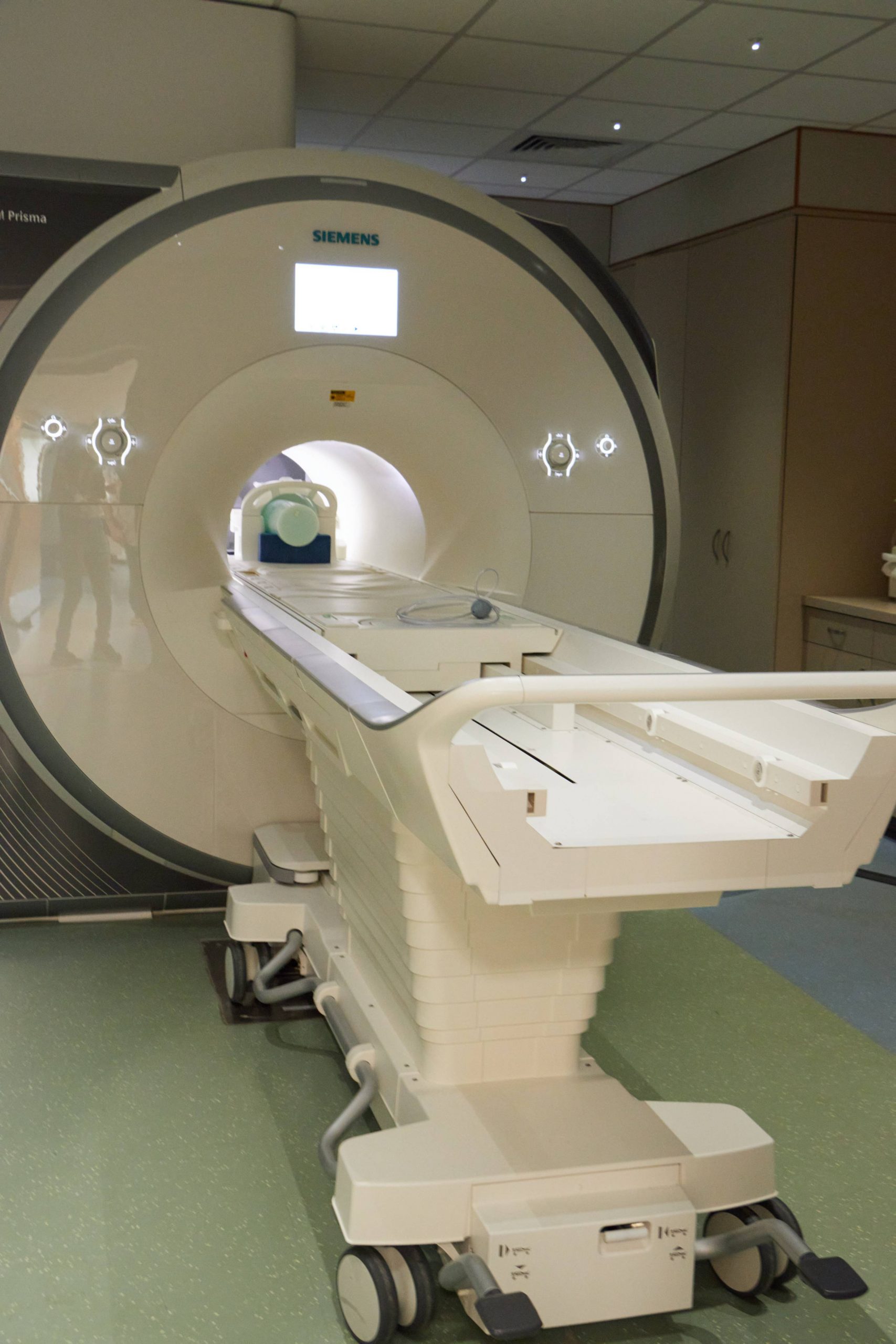
3.0 Tesla Siemens Prisma scanner is available for structural and functional MRI scanning, as well as for magnetic resonance spectroscopy (MRS). This system has 80mT/m maximum amplitude gradient hardware, and a slew rate of 200T/m/sec with a 100% duty cycle. It also includes 20- and 32-channel head and 64-channel head/neck receive array coils with parallel imaging capabilities. This system is also equipped with 32-channel spine coil, shoulder coil, hand/wrist coil, foot/ankle coil, knee coil, and 18-channel body coil. The signal quality and operating characteristics of the scanner are routinely monitored using ACR, fBIRN, and dynamic phantoms.
Mock MRI: There is also an MRI simulator in a dedicated room in the BIRC that allows for training of subjects that might have difficulty staying still in the magnet (such as children) and also for subjects that might suffer from mild claustrophobia. The mock scanner includes equipment for displaying stimuli and for monitoring and providing feedback on head motion via and will be used for orientation to the MRI environment and training and in-scanner tasks.
Specifications
BIRC houses a 3-Tesla Siemens Prisma scanner equipped with an eye-tracker as well as a range of head and body coils:
- 20-channel head/neck coil
- 32-channel head coil
- 64-channel head/neck coil
- 32-channel spine coil
- Large and Small Shoulder coils
- Large and Small Flex coils
- Hand/Wrist coil
- Foot/Ankle coil
- Knee coil
- 18-channel body array coil
Product and research pulse sequences for:
- Structural imaging (Siemens or MGH sequences)
- Diffusion imaging (Siemens or CMRR sequences)
- BOLD
- Susceptibility Weighted Imaging (SWI)
- Spectroscopy and chemical shift imaging (Siemens or CMRR sequences)
- Simultaneous Multislice (SMS) EPI (Siemens or CMRR sequences)
- Arterial Spin Labeling
Stimulus presentation and response hardware for high fidelity auditory and visual presentation:
- Avotec Silent Scan audio system
- Optoacoustics OptoACTIVE II audio system
- Hyperion MRI Digital Projection System
- Current Designs MR-compatible response pads
- In-Scanner Eye Tracking (SR Research Eye Link 1000 Plus)
- Presentation using a PC, Mac, or your own laptop
Training
Investigators and students wishing to conduct research using our Siemens Prisma 3T scanner will need to complete Advanced Safety Training at BIRC. This involves a period of approximately 90 minutes, during which you will receive hands-on orientation to the MRI suite (Zones 3 and 4). Note: you must complete Level 1 safety training and complete all required reading (provided when AST session is scheduled) prior to the session. Please contact Elisa Medeiros to schedule safety training.
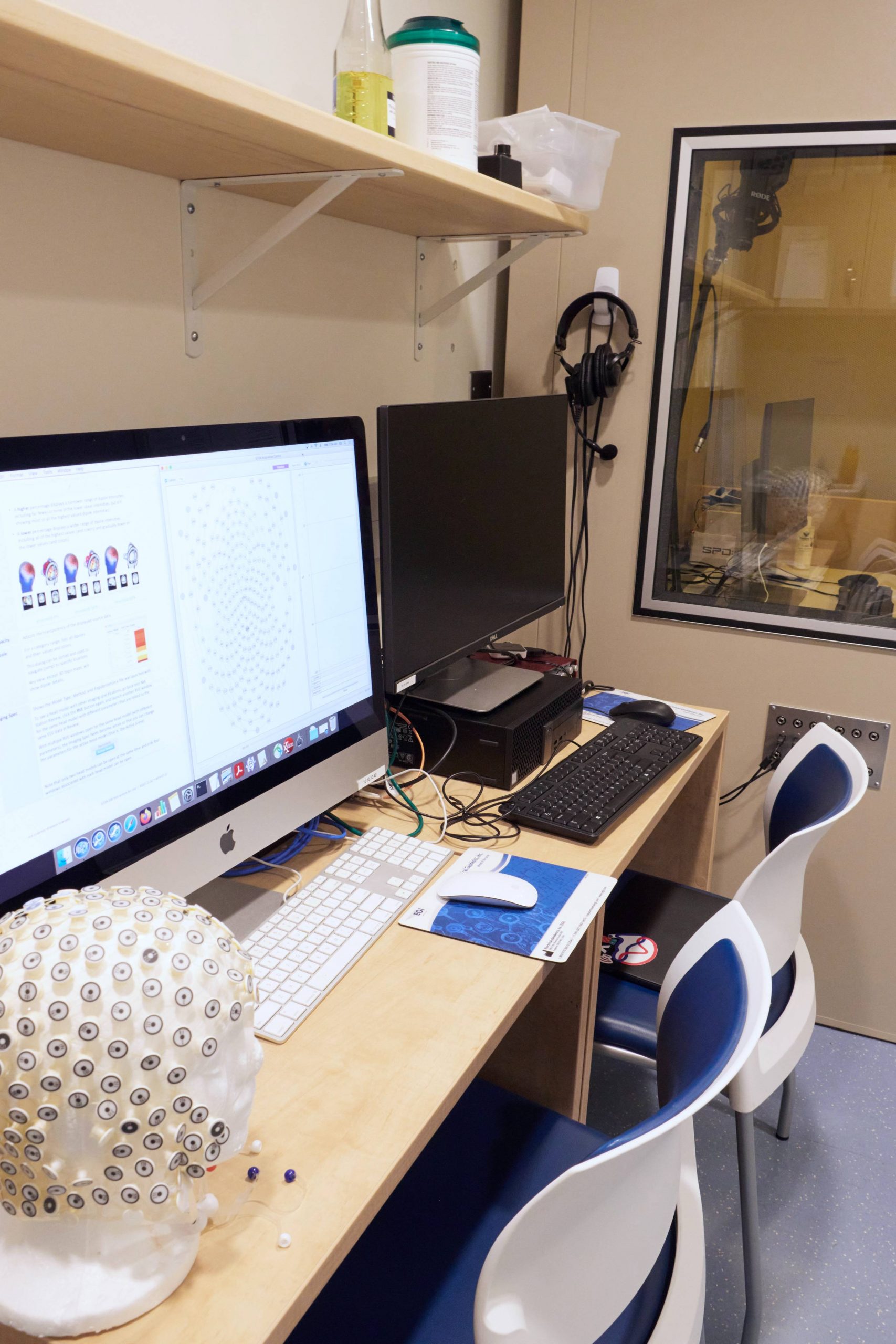
EEG: 256-Channel EEG System (EGI)
The BIRC houses two 256-channel EEG systems from EGI with a full range electrode caps in pediatric and adult sizes. A Net Amps 410 is available for simultaneous EEG/MRI and a Net Amps 400 GTEN system is available for out-of-scanner use. The latter is equiped with a neuromodulation package and software for high density tDCS, tACS, tRNS and tPCS. An EGI Geodesic Photogammetry System (GPS) is available for electrode localization in conjunction with EEG or tDCS studies.
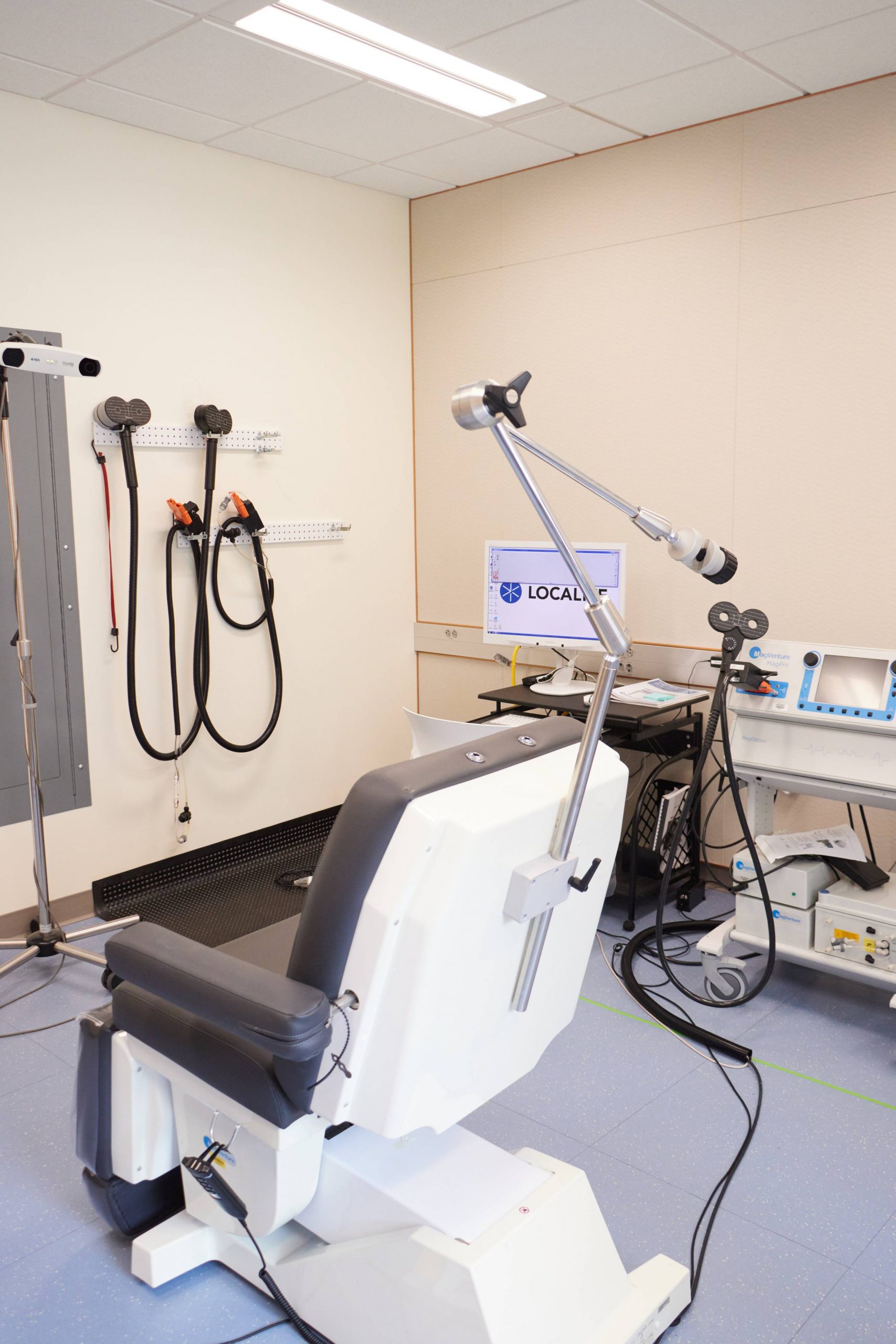
MagVentures Transcranial Magnetic Stimulation (TMS)
A MagVentures MagPro X100 with MagOption is available for TMS. This system is capable of generating high duty biphasic and monophasic pulse sequences for single pulse, paired pulse or repetitive stimulation. The system is equipped with flat and 120º butterfly coils, and a liquid-cooled blinded active/sham butterfly coil. Pulse localization on individual anatomy is facilitated by a Localite TMS Navigator system.
Laboratory
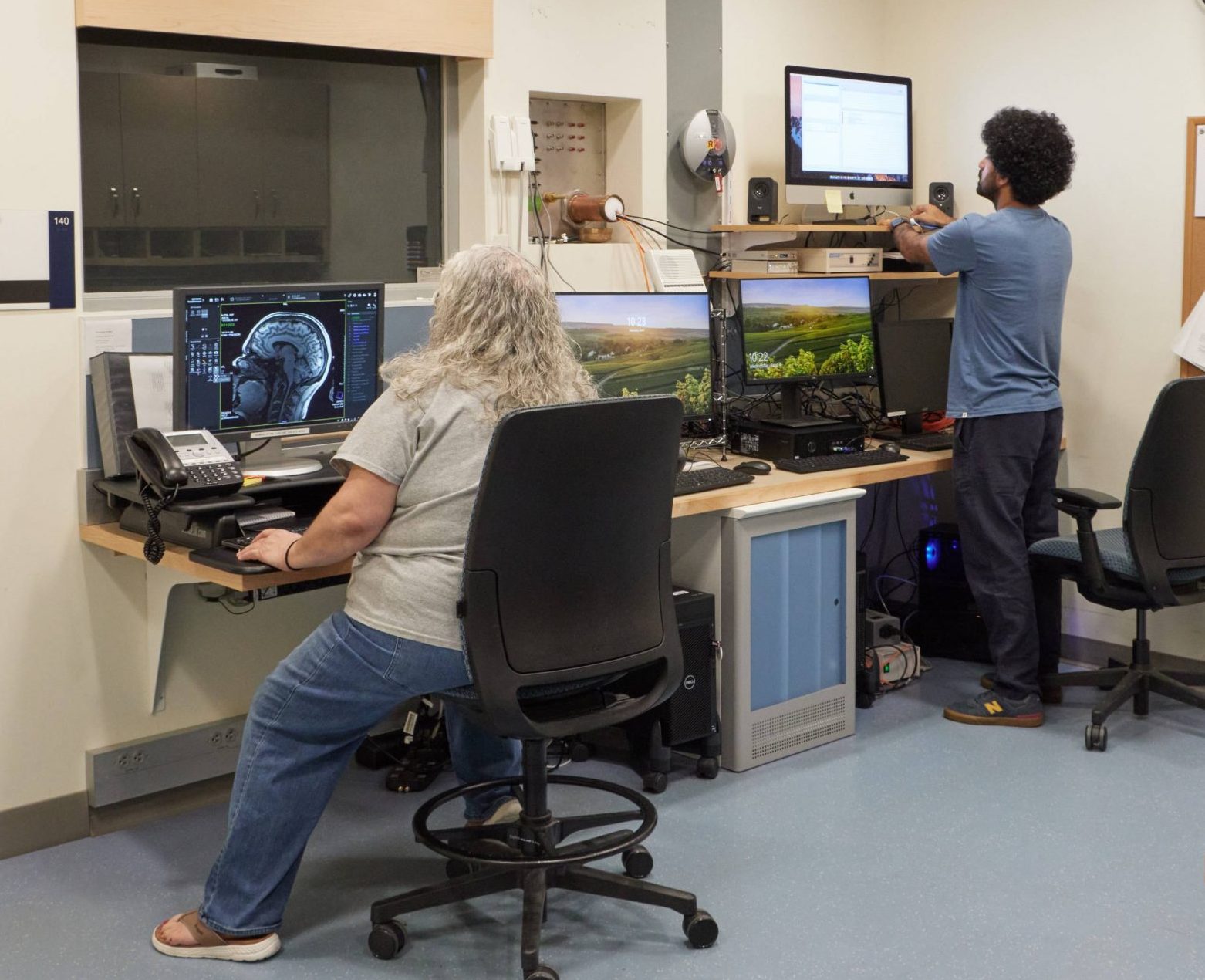
BIRC facilities include dedicated spaces for functional brain imaging for computing, and image and data analysis. The core contains all of the resources necessary for integrated studies of human brain function as it houses all of the research scanners and personnel in one contiguous facility.
Computing
The center houses a high-end data processing lab, featuring 4 high-end Mac Workstations with common software (e.g. Docker, AFNI, FSL, Freesurfer, MATLAB, R). In addition to in-house computing, two high performance computing (HPC) systems are available to UConn faculty, providing access to accelerated GPU and parallel computing. BIRC has purchased one semi-dedicated 32-core processing node for priority access.
High-Performance Computing (HPC) facilities
The University manages HPC systems on the Storrs campus and in Farmington at UConn Health. The systems are optimized for different computational problems, with the Storrs focusing on compute-intensive workloads and the Farmington facility on data-intensive workloads. Both provide access to accelerated GPUs, parallel computing, and 1 PB of parallel file storage and 3 PB archival storage distributed across multiple datacenters. The Farmington facility has 3,000 processor cores, and the Storrs HPC cluster currently has over 11,000 CPU cores on 400 nodes. We maintain a data transfer node with Globus software for large data transfers both within and outside of the environment. Network traffic travels over Ethernet at 10Gb per second between nodes, and file data travels over InfiniBand at 56Gb or 100Gb per second, depending on the node. All UConn researchers may use the community queues, but researchers may purchase semi-dedicated nodes for high priority access. Computational applications, including containers, are installed as needed; to date, over 200 have been made available.
Proteomics & Metabolomics
About Us

Jeremy Balsbaugh, Ph.D.
Facility Director
Office: Pharmacy/Biology Building Room 531
Lab: Pharmacy/Biology Building Rooms 511/513
jeremy.balsbaugh@uconn.edu
860-486-3319
Jeremy has over 15 years of mass spectrometry-based research experience. After receiving a B.S. in chemistry from Messiah College in Grantham, PA, he pursued a Ph.D. in bioanalytical chemistry from the University of Virginia under the direction of Donald F. Hunt, a pioneer in the proteomics field. Following completion of his dissertation titled "Studies in Protein Post-Translational Modification using CAD and ETD Mass Spectrometry" and graduation from UVA, he joined Natalie Ahn's laboratory at the University of Colorado at Boulder for a post-doctoral research appointment focused on applying Hydrogen-Deuterium Exchange Mass Spectrometry and additional biochemical analysis to study the relationship between structure and function in various enzymes.
Jeremy served the University of Colorado at Boulder Department of Chemistry & Biochemistry as Director of the Central Analytical Laboratory and Mass Spectrometry Core Facility from 2014 - early 2017 before joining the research community at UConn.
As a member of the Center for Open Research Resources & Equipment, it is Jeremy's goal to bring his expertise and state-of-the-art mass spectrometry-based technologies to the University of Connecticut, UConn Health, and the Connecticut public and private research communities at large. Contact Jeremy directly for more information on beginning your future project.

Jen Liddle, Ph.D.
Facility Scientist
Office: Pharmacy/Biology Building Room 531
Lab: Pharmacy/Biology Building Rooms 511/513
jennifer.liddle@uconn.edu
860-486-1591
Jen has over 10 years of coast-to-coast mass spectrometry research experience. She was first introduced to MS instrumentation at Western Washington University in Bellingham, WA, where she completed a B.S. in Biochemistry. She subsequently joined Natalie Ahn's lab at University of Colorado Boulder, where she received her Ph.D. in Biochemistry, using hydrogen-deuterium exchange mass spectrometry to study the activation and allosteric regulation of MAP kinases. She then accepted a joint postdoctoral position with the Weitzman lab at Children's Hospital of Philadelphia and the Garcia lab at University of Pennsylvania, applying proteomics to study the effects of viruses on protein interactomes, histone modifications, and ubiquitin signaling.
As a member of the Center for Open Research Resources & Equipment, it is Jen's goal to provide a creative, customized partnership between the diverse needs of the Connecticut research community and the analytical capabilities available in UConn PMF.

Sonam Tamrakar, Ph.D.
Research Assistant III
Office: Pharmacy/Biology Building Room 531
Lab: Pharmacy/Biology Building Rooms 511/513
sonam.tamrakar@uconn.edu
Sonam has over 8 years of research experience in liquid chromatography and mass spectrometry. She completed her Masters degree in Applied Microbiology at Banaras Hindu University, India. She joined Professor Kuniyoshi Shimizu’s lab in Kyushu University, Japan for her Ph.D. program where she studied small molecule bioactive compounds in wild mushrooms from her home country Nepal. She continued her research on natural product-derived small molecules as a postdoctoral researcher at Kyushu University. She then joined Professor Weiming Li’s lab at Michigan State University (MSU) as a Research Associate. Her research work at MSU focused on developing and optimizing methods for extraction and LCMS-based quantification of fish pheromones and other small molecules. She also incorporated targeted and untargeted metabolomics analysis for sea lamprey plasma and liver tissues.
Sonam joined the Proteomics and Metabolomics Facility (PMF) in January 2024 and as a member of the Center for Open Research Resources & Equipment, it is her goal to help PMF users and collaborators find the best possible way to utilize the resources at PMF to answer their research questions.
Campus Address
Pharmacy/Biology Building, Rooms 511/513
Sample Shipment Address
75 North Eagleville Road
TLS Room 175
Storrs, CT 06269
USPS mailing address
75 North Eagleville Road, Unit 3149
Storrs, CT 06269
Faculty Scientific Advisers

Spencer Nyholm, Ph.D.
Associate Professor
Biology Physics Building 405
spencer.nyholm@uconn.edu
860-486-4886

Daniel Schwartz, Ph.D.
Associate Professor
Pharmacy Biology Rm 217/219
daniel.schwartz@uconn.edu
860-486-0596

Xudong Yao, Ph.D.
Associate Professor
Chemistry A-419
x.yao@uconn.edu
860-486-6644

Rates
FY2025 rates are listed below and are active as of January 1, 2025. All rates subject to change.
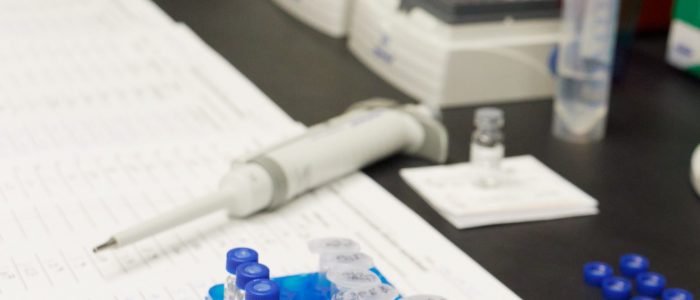
Sample Preparation Fees
| Billable unit | UConn† | External academic | Industry | |
| In-gel digestion (Coomassie blue- or silver-stained)* | per band | $69 | $92 | $137 |
| In-solution tryptic digestion (<25 ug)^ | per sample | $69 | $92 | $137 |
| In-solution tryptic digestion (>25 ug)^ | per sample | $89 | $113 | $157 |
| Non-trypsin endoproteinases | per vial | Reagent cost | Reagent cost | Reagent cost |
| Filter-Aided Sample Preparation (FASP)^ | per sample | $181 | $234 | $347 |
| S-Trap^ | per sample | $160 | $216 | $320 |
| In-vitro labeling | per sample | $90 + reagent cost | $114 + reagent cost# | $143 + reagent cost# |
| PTM enrichment | per hr | $90 + reagent cost | $114 + reagent cost# | $143 + reagent cost# |
| Offline fractionation | per sample | $83 | $119 | $176 |
| Intact protein sample clean-up | per sample | $25 | $34 | $50 |
| Custom sample prep (e.g. BCA protein quantification) | per hr | $90 + reagent cost | $114 + reagent cost | $143 + reagent cost |
*includes destaining, reduction, alkylation, tryptic digestion, peptide extraction and clean-up
^includes reduction, alkylation, tryptic digestion, peptide clean-up
UPLC-MS & UPLC-MS/MS Analysis Fees
| Billable rate | UConn† | External Academic | Industry | |
| Nanoflow Proteomics Applications |
||||
| Experiment set-up fee for assisted proteomics analysis#NEW | per experiment | $90 | $114 | $143 |
| Intact protein mass measurement (by infusion) | per sample | $47.50 | $49 | $72 |
| timsTOF HT UPLC-MS/MS analysis | per hr | $60.50 | $112 | $168 |
| Orbitrap Eclipse UPLC-MS/MS analysis | per hr | $61.50 | $122 | $181 |
| QE-HF UPLC-MS/MS analysis | per hr | $44.50 | $93 | $145 |
| Hydrogen-Deuterium Exchange-MS (HDX-MS) assisted analysisCOMING SOON! | per hr | $65.50 | $126 | $195 |
| Microflow Metabolomics Applications | ||||
| Experiment set-up fee for user-operated metabolomics analysis#NEW | per reservation | $45 | $57 | $71.50 |
| Experiment set-up fee for assisted metabolomics analysis#NEW | per experiment | $90 | $114 | $143 |
| timsTOF HT UPLC-MS/MS user-operation‡ | per hr | TBA | TBA | TBA |
| timsTOF HT UPLC-MS/MS assisted analysis∅ | per hr | $57.50 | $112 | $168 |
| Synapt G2-Si UPLC-MS/MS user-operation‡ | per hr | $21 | $65 | $97 |
| Synapt G2-Si UPLC-MS/MS assisted analysis∅ | per hr | $43.50 | $91 | $148 |
| Xevo G2-XS UPLC-MS/MS User-Operation‡ | per hr | $16 | $49 | $72 |
| Xevo G2-XS UPLC-MS/MS assisted analysis∅ | per hr | $38.50 | $66 | $89 |
‡User-operation requires previous instrument training performed by PMF Faculty
∅Assistance or Full-Service provided by PMF Faculty only
#Includes instrument calibration(s), LC solvent changes, column cleaning, QC and blank injections. For assisted runs, this includes sample transfer to injection vials and establishing sample queue(s).
Training Fees
| Billable rate | UConn† | External Academic | Industry | |
| timsTOF HT, Synapt G2-Si, Xevo G2-XS, or software training | per hr | $90 | $114 | $143 |
Data Analysis Fees
| Billable rate | UConn† | External Academic | Industry | |
| Manual data analysis (e.g. PTM localization, custom quantitation) | per hr | $90 | $114 | $143 |
| Standard informatics-based processing of raw data | per experiment | included in run-time fees | included in run-time fees | included in run-time fees |
†Lower PMF rates are available to UConn and UConn Health users due to University subsidy.

Instrumentation
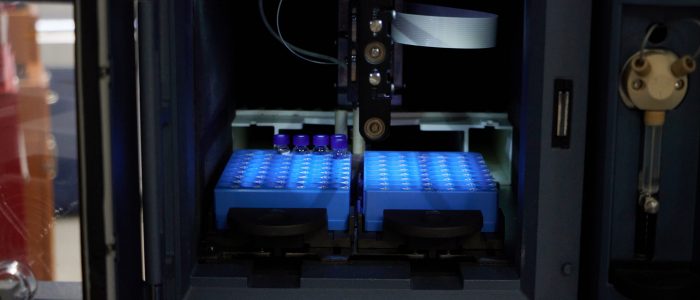
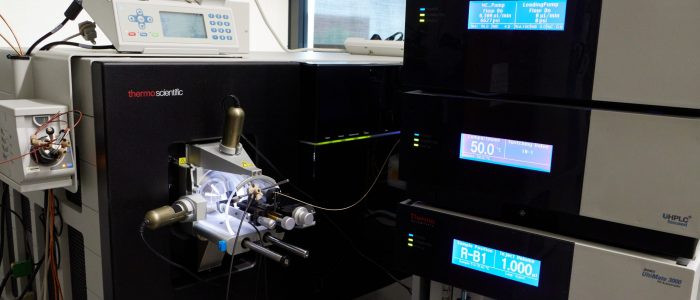
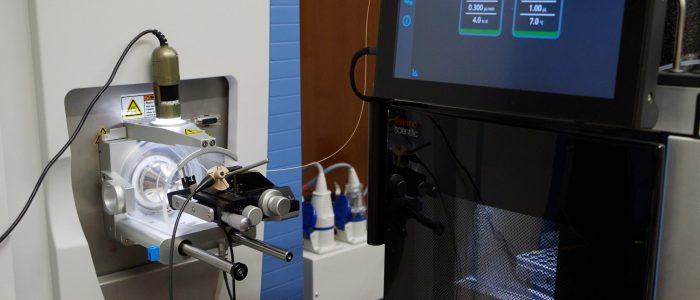
Bruker timsTOF HT Mass Spectrometer
- Provides unprecedented depth of proteome coverage and sensitivity via Parallel Accumulation with Serial Fragmentation (PASEF) technology and Trapped Ion Mobility Spectrometry (TIMS)-mediated gas phase separations of ions for increased selectivity prior to mass analysis
- Features maximum MS and MS/MS scan rates of ~150 Hz
- Capable of multiple mass spectral acquisition options that incorporate PASEF technology, including data-dependent acquisition (DDA-PASEF), data-independent acquisition (DIA-PASEF), and parallel-reaction monitoring (PRM-PASEF) modes
- Directly coupled to a Thermo Scientific Dionex Ultimate 3000 RSLCnano UPLC for high resolution, reversed-phase liquid peptide separations at nanoflow rates for maximum sensitivity

Thermo Scientific Orbitrap Eclipse Tribrid Mass Spectrometer
- Provides multiple mass analysis and detection modes for MS and MS/MS using an Orbitrap or dual-pressure linear ion trap
- Features multiple types of gas-phase fragmentation including collision-induced dissociation (CID), higher energy C-trap dissociation (HCD), electron transfer dissociation (ETD) plus hybrid versions of these techniques: EThcD and ETciD
- Equipped to perform Real-Time Search (RTS) and Synchronous Precursor Selection (SPS) MS3-based acquisition methods for multiplexed proteomics analyses that incorporate Thermo Scientific Tandem Mass Tags (TMT) reagents for peptide quantitation
- Capable of multiple mass spectral acquisition options including data-dependent acquisition (DDA), data-independent acquisition (DIA), and parallel-reaction monitoring (PRM) modes
- Directly coupled to a Thermo Scientific Dionex Ultimate 3000 RSLCnano UPLC for high resolution reversed-phase liquid peptide/protein separations at variable flow regimes, including nanoflow rates for maximum sensitivity
Internal Rates
$86/hour Analysis
External Rates
$116.50/hour Analysis External Academic
$172/hour Analysis Industry

Thermo Scientific Q Exactive HF Mass Spectrometer
- Provides high resolution, accurate mass determinations for MS and MS/MS analysis of proteins and peptides in complex mixtures using High-Field (HF) Orbitrap technology
- Capable of multiple mass spectral acquisition options including data-dependent acquisition (DDA), data-independent acquisition (DIA), and parallel-reaction monitoring (PRM) modes
- Directly coupled to a Thermo Scientific Dionex Ultimate 3000 RSLCnano UPLC for high resolution reversed-phase liquid peptide/protein separations at variable flow regimes, including nanoflow rates for maximum sensitivity
Internal Rates
$89/hour Analysis External Academic
$138.50/hour Analysis Industry
$46.58/sample Intact protein mass measurement External Academic
$69/sample Intact protein mass measurement Industry
$108.80/hour Manual data analysis(e.g. PTM localization, custom quantitation) External Academic
$136/hour Manual data analysis(e.g. PTM localization, custom quantitation) Industry
External Rates
$60/hour Unassisted, Non-profit
$90/hour Assisted, Non-profit
$100/hour Consulting/Set-Up/Training Fee, Non-profit
$90/hour Unassisted, For-profit
$150/hour Assisted, For-profit
$150/hour Consulting/Set-Up/Training Fee, For-profit

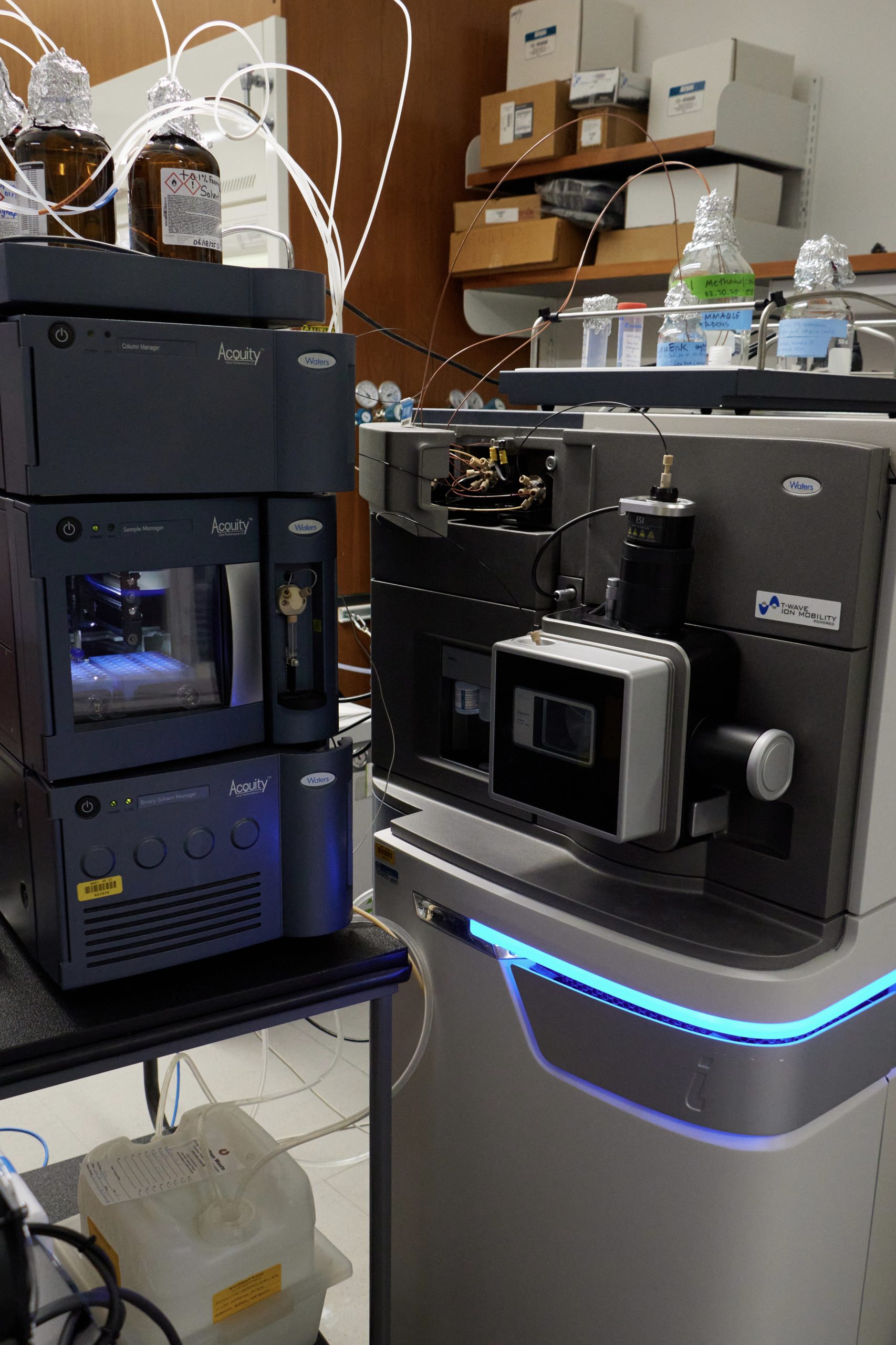
Waters Synapt G2-Si Mass Spectrometer
- Provides high resolution, accurate mass determinations for MS and MS/MS analysis of proteins and peptides in complex mixtures using High-Field (HF) Orbitrap technology
- Capable of multiple mass spectral acquisition options including data-dependent acquisition (DDA), data-independent acquisition (DIA), and parallel-reaction monitoring (PRM) modes
- Directly coupled to a Thermo Scientific Dionex Ultimate 3000 RSLCnano UPLC for high resolution reversed-phase liquid peptide/protein separations at variable flow regimes, including nanoflow rates for maximum sensitivity
Internal Rates
$68/hour Training Fee
$64/hour Assisted Analysis Unassisted run time following training by facility faculty
$44/hour User-operation
External Rates
$108.80/hour Training Fee External Academic
$136/hour Training Fee Industry
$86.50/hour Assisted Analysis External Academic
$141/hour Assisted Analysis Industry
$62/hour User-operation External Academic
$92.50/hour User-operation Industry
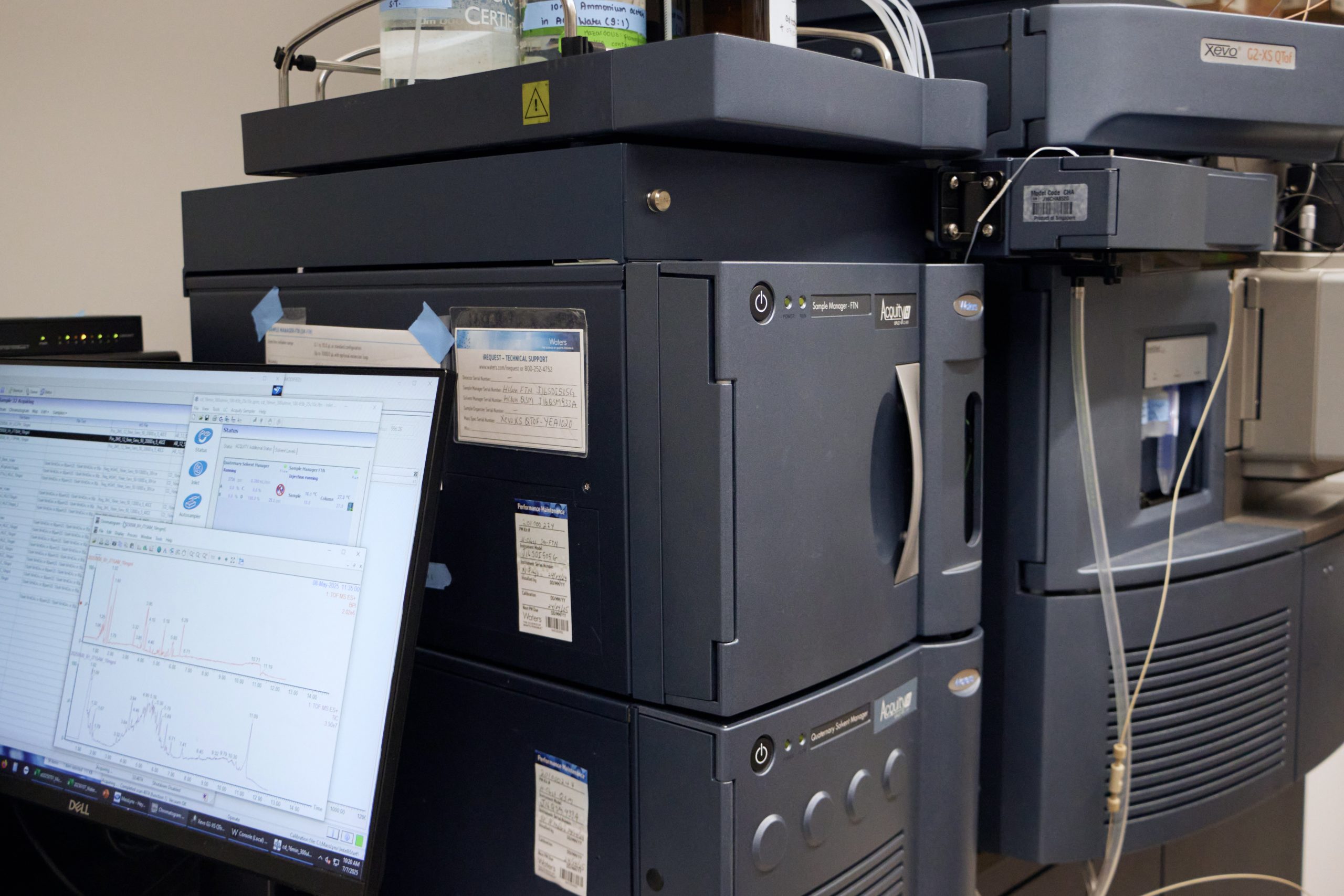
Waters Xevo G2-XS q-TOF Mass Spectrometer - with SONAR
Provides high resolution, accurate mass measurements for MS and MS/MS analysis of small molecules in complex mixtures using q-TOF technology. Capable of multiple mass spectral acquisition options including DDA and DIA modes (MSe and SONAR)
Internal Rates
$68/hour Training Fees
$51/hour Assisted Analysis
$35/hour User-operation
External Rates
$108.80/hour Training Fee External Academic
$136/hour Training Fee Industry
$62.50/hour Assisted Analysis External Academic
$85/hour Assisted Analysis Industry
$47/hour User-operation External Academic
$69/hour User-operation Industry
Available Software
- Proteomics: MaxQuant (Ref), MaxQuant, Spectronaut v17, Proteome Discoverer v2.5 with XlinkX node (Thermo Scientific), Byonic (Protein Metrics, Inc.), Scaffold v5.0 (Proteome Software, Inc.)
- Metabolomics: Metaboscape (Bruker), Progenesis QI (Nonlinear Dynamics)
Statistical Consulting Services (SCS)
Consulting
In addition to our other consulting services, consultants can provide free statistical support for quick questions about grant applications, journal articles, Ph.D. Dissertations, M.S. Theses, and undergraduate research projects. Undergraduate students, please note that we will not be able to aid with homework or class projects.
SCS Collaboration
Hourly Rates
Our initial intake meetings are free of charge. Our internal fees are as follows:
$75/hour | Grad Students - Set up or consulting time
$95/hour | Post-Doc - Set up or consulting time
$120/hour | Director - Set up or consulting time
External clients should contact Timothy E. Moore (timothy.e.moore@uconn.edu) for more fee information.
Submitting data
Although our consultants can help with correctly formatting data, we highly recommend that clients attempt to have their data appropriately formatted prior to submission to our service. More information about formatting data.pdf and using OpenRefine to clean up data. Examples of wide and long data formats (we recommend one of these be used for submission).
Project Scope
The majority of projects taken on by the SCS are what we call short-term consultations, with a total duration of no more than 15 student hours worth of work. Consultations anticipated to require substantially more than roughly 15 hours of work may be recommended for collaborative consulting. Evaluation of such recommendations typically will include a discussion of co-authorship on resulting end-products.
Policies on Acknowledgement of Statistical Consulting and Collaboration
For projects which lead to presentations, projects, or publications it is expected that appropriate authorship will be discussed for those statisticians substantively involved. When the scope of the work is limited to less than 15 hours, but nevertheless is used in a presentation, project, or publication, we would appreciate an appropriate citation or acknowledgment. For example, clients may include "We acknowledge the help of [NAME] of UConn's Statistical Consulting Services under the guidance of Dr [NAME]” as a footnote accompanying grant support and related projects."1 If you have any questions regarding our acknowledgement policy, please contact Timothy E. Moore at timothy.e.moore@uconn.edu.
1 This policy is intended to allow clients maximum flexibility in seeking out and benefiting from our statistical consulting work while, at the same time, promoting best practice regarding academic intellectual property. For more information, we direct clients to the American Statistical Association’s guide to working with a statistical consultant (ASA_brochure.pdf).
Statistical Software
Faculty, staff and students at UConn have access to a wide variety of statistical software. These statistical tools provide varied levels of support for data exploration, analysis and visualization.
Licensed Software
Open Source Software
UConn Anywhere
UConn affiliates can also access software online through UConn Anywhere:
"As an alternative to downloading and installing applications directly onto your computer, you can access the select university-licensed software on your devices through UConn AnyWare."
Access UConn Anywhere via software.uconn.edu/uconn-software-online.
Project Support
Clients may be referred to the SCS from a regularly scheduled consulting appointment. The SCS accepts projects from clients or researchers. Request project support through the project form.
Campus Address
Nathan L. Whetten Graduate School Building
Room 308
Mailing Address
Nathan L. Whetten Graduate School Building
438 Whitney Rd Ext.
Storrs, CT 06269
SCS Spring 2025 Consulting Team
The SCS is staffed by late-career Ph.D. students from UConn's Department of Statistics. These students come from diverse backgrounds and have a wide variety of skills and interests. This allows the SCS to offer analytical support on a wide range of research topics, and provide assistance on a number commonly encountered statistical issues, such as, missing data imputation, generalized linear and non-linear mixed effects models, time series analysis, variable selection, and many more!

Timothy Moore, Ph.D.
Director
Whetten Graduate Building
timothy.e.moore@uconn.edu
860-486-0074

Eric Bae, Ph.D.
Post-Doc
Whetten Graduate Building
eric.bae@uconn.edu

Xiaojing Wang
Faculty Advisor
AUST 334
xiaojing.wang@uconn.edu
860-486-3415
Boming Chen
PhD Consultant
boming.chen@uconn.edu
So Eun Kim
PhD Consultant
so_eun.kim@uconn.edu
Loreina Guo
PhD Consultant
yca24001@uconn.edu
Yueqiao Li
PhD Consultant
yueqiao.li@uconn.edu
Manjun Yu
PhD Consultant
manjun.yu@uconn.edu
MinHee Seo
PhD Consultant
minhee.seo@uconn.edu
Services & Rates
Free On-Demand Assistance
SCS provides two modes of on-demand assistance for UConn faculty, students and staff; walk-in and online. This assistance is geared to data analysis rather than specific statistical software usage.

Project Engagement
Collaborative consulting and assistance with data analysis through SCS requires funding for the statistical consultant on an hourly basis. Consultations may be with a faculty member, a graduate student under faculty supervision or directly involved with the problem, or the on-site statistician at your organization.
Internal Rates
$75/hour Grad Students - Set up or consulting time
$95/hour Post-Doc - Set up or consulting time
$120/hour Director - Set up or consulting time
External Rates
Available upon request. Contact timothy.e.moore@uconn.edu for more information.

Available Software
- Proteomics: MaxQuant (Ref), MaxQuant, Spectronaut v17, Proteome Discoverer v2.5 with XlinkX node (Thermo Scientific), Byonic (Protein Metrics, Inc.), Scaffold v5.0 (Proteome Software, Inc.)
- Metabolomics: Metaboscape (Bruker), Progenesis QI (Nonlinear Dynamics)

Mechanical & Electronic Services (MES)
Staff

Scott LaForest
Facility Director
Thomson Hall, Depot Campus
scott.laforest@uconn.edu
860-486-1096
Campus Address
Thomson Hall, Unit 5108
Depot Campus
Mailing Address
Mechanical/Glass: Design & Fabrication Facility
30 Ahern Lane
Thomson Hall, Unit 5108
Storrs, CT 06269-5108
Services and Rates
Prototype Development
On request, assistance can be provided for prototype development. Custom and specialized equipment can be manufactured. This includes:
- CAD modeling
- Mechanical drawings for in-house fabrication, outside production, or patent applications
- 3D printing using FDM or LCD Resin printers
Internal Rates
$100/hour Internal Rate
External Rates
$120/hour Non-profit/Academic
$120/hour For-profit


Repairs
Repairs can be made to complex scientific and mechanical equipment, including diffusion pumps, McLeod Gauges, Nitrogen Cryogenic Dewars, and distillation equipment.
Internal Rates
$100/hour Internal Rate
External Rates
$120/hour Non-profit/Academic
$120/hour For-profit

Mechanical Technology
Skilled technicians design, fabricate, or repair complex scientific and mechanical instruments and carry out jobs in precision machining, brazing, soldering, welding, woodworking, sheet metal working, and Plexiglass fabrication.
Internal Rates
$100/hour Internal Rate
External Rates
$120/hour Non-profit/Academic
$120/hour For-profit

Scientific Glassblowing
Glassblowing services are carried out from the Yale University Glass Shop. The drop-off location for all scientific glassware repairs will be on the large metal shelf across from the machine shop (room R006) in the Chemistry building.
Specifications
Place your clean, broken glassware into a sturdy cardboard box along with a sheet containing the PI name, contact name, phone number, email, and any specific instructions for our glassblower Daryl Smith (daryl.smith@yale.edu). Please use bubble wrap or paper to make sure the boxes can be transported by car without further damage to your glassware.
The boxes will be picked up at regular intervals and repaired glassware will be placed back on the shelf when completed. Users will be notified when the glassware was repaired and/or is back.
Users may also drop off their glassware at the Mechanical or Electrical COR²E facilities in Thomson Hall on the Depot campus (at 30 Ahern Lane).
Please contact Daryl directly to discuss any special projects.
Internal Rates
$102/hour Internal Rate

Request Services
Flow Cytometry
Staff

Amanda DelVichio, Ph.D.
Facility Scientist
Biology Physics Building G05
amanda.delvichio@uconn.edu
860-486-3080
Faculty Scientific Advisers

Adam Zweifach, Ph.D.
Associate Professor
Biology/Physics Building 306
Adam.zweifach@uconn.edu
860-486-1627

Andrew Wiemer, Ph.D.
Professor
School of Pharmacy 633
Andrew.wiemer@uconn.edu
860-486-3966

David Goldhamer, Ph.D.
Professor
Biology Physics Building G24
David.goldhamer@uconn.edu
860-486-8337
Campus Address
Biology Physics Building, Room G05
Storrs Campus
Mailing Address
Flow Cytometry Facility
Center for Open Research Resources and Equipment
91 North Eagleville Road, Unit 3149
Storrs, CT 06269
Instrumentation
Cytek Aurora CS
The Cytek Aurora CS redefines cell sorting with full-spectrum flow cytometry technology. The Aurora CS offers unparalleled flexibility in panel design and the ability to resolve complex populations with exceptional clarity. Equipped with up to 5 lasers and capable of detecting over 64 parameters, this advanced sorter supports high-speed, high-purity sorting. It is equipped to sort up to 6 separate populations simultaneously, into tubes or plates. With intuitive software, a customizable optical array, and minimal compensation requirements, the Aurora CS is ideal for any sorting need.
Internal Rates
$121.20/hour Assisted Sorting
The minimum charge for cell sorting is 1 hour/session.
External Rates
Assisted Sorting, Industry
The minimum charge is 1 hour/session.
Assisted Sorting, Academic
The minimum charge is 1 hour/session.

BD LSRFortessa X-20 Cell Analyzer
The BD LSRFortessa X-20 flow cytometer, equipped with the High Throughput Sampler (HTS) module, delivers high-parameter flow cytometry with exceptional speed and flexibility. It houses 5 lasers and the ability to detect up to 20 parameters simultaneously. It provides high-resolution and multiparameter analysis suited for complex cell populations. The integrated HTS system enables automated, rapid sample acquisition from 96-well plates, making it ideal for high-throughput screening and large-scale experiments. Engineered for performance, the Fortessa X-20 streamlines data collection without compromising sensitivity or data quality. Independent user status is available. Training is required to become an independent user on the Fortessa X-20. To be trained please complete the training request from. Once trained, the cytometer is available 24 hrs/7 days a week.
Internal Rates
$24/hour Unassisted Analysis
The minimum charge for analysis is .5 hour/session.
$92/hour Assisted Analysis or Training
External Rates
Assisted Analysis, Industry
The minimum charge is .5 hour/session.
Assisted Analysis, Academic
The minimum charge is .5 hour/session.
Unassisted Analysis, Industry
The minimum charge is .5 hour/session.
Unassisted Analysis, Academic
The minimum charge is .5 hour/session.
Training, Industry
Training, Academic

FlowJo
FlowJo is the gold standard for flow cytometry data analysis, empowering researchers to explore complex single-cell data with precision and ease. With an intuitive interface and powerful tools for gating, statistics, graphing, and high-dimensional analysis, FlowJo supports all your analysis needs. The software is offered on a first-come first-served basis and is housed within the facility.

Cytek Cloud™
Cytek Cloud™ is a secure, web-based platform designed to streamline and enhance your flow cytometry workflow. Cytek Cloud allows users to upload, manage, and view spectral cytometry data from anywhere. With integrated analysis tools, collaboration features, and direct compatibility with Cytek instruments, it empowers teams to work more efficiently and accelerate discovery. Whether you're in the lab or working remotely, Cytek Cloud keeps your data accessible, organized, and ready for insight. Contact the facility for the instrument serial number.

Services and Rates
- Training and education on flow cytometry theory and facility instruments (required for all new flow users).
- Un-assisted acquisition (24/7 access to Fortessa Analyzer, and Analysis Stations for independent users)
- Consultations on experimental design and new strategy development
- Staff-assisted flow acquisition and data analysis; Cytometric Beads Assay, etc.
- Project troubleshooting, data interpretation, deep analysis and customized support
- Software support, Flowjo, Diva, etc.
- Staff-operated Cell Sorting (Monday-Friday, by appointment through facility director)
- Contact facility director for consultation, training, sorting schedule, or any other questions.